10 Jul 2026
Auditory Layering Techniques for Improved Spatial Awareness in Web-Based Multiplayer Racing and Shooting
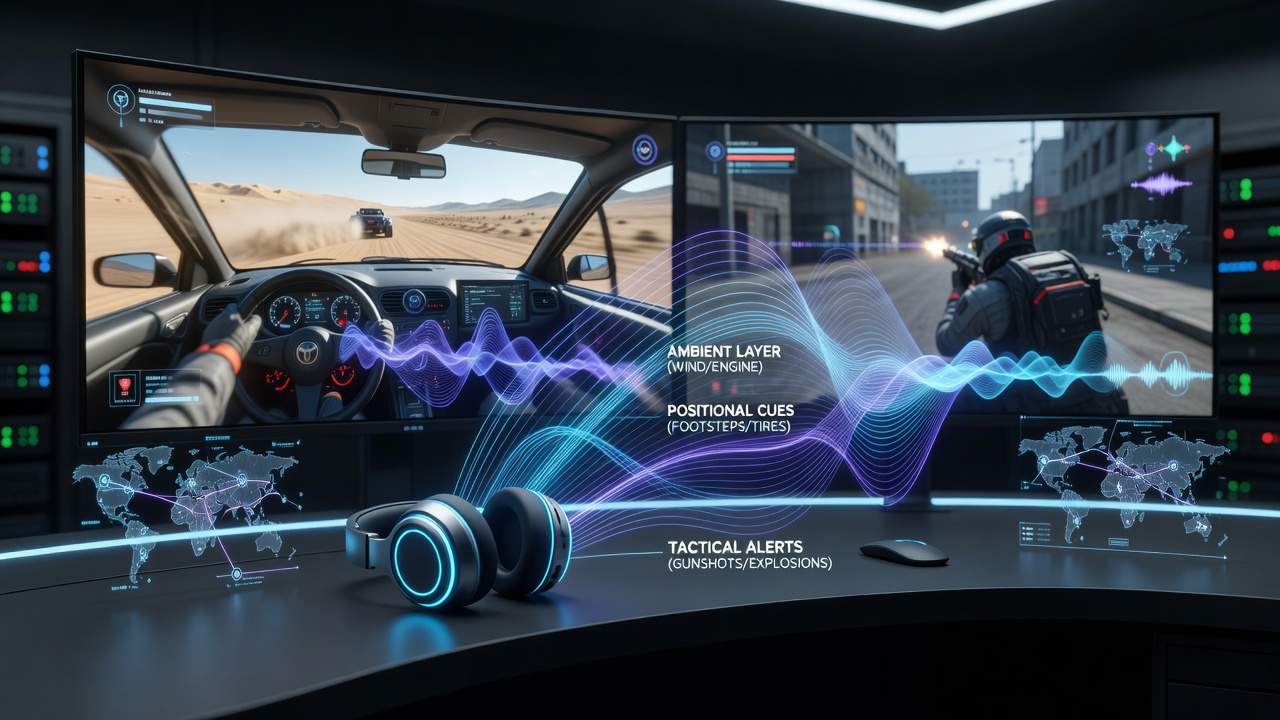
Web-based racing and shooting sessions rely on auditory layering to build spatial awareness among distributed player groups, where sound elements stack in distinct channels to convey position, distance, and movement without constant visual reliance. Developers separate engine hums, tire friction, projectile impacts, and environmental echoes into independent audio streams that browsers render through Web Audio API implementations, allowing players to triangulate locations during real-time matches. Research indicates these layered approaches reduce disorientation in latency-affected environments, particularly when participants connect from varied geographic regions.
Core Components of Auditory Layering in Browser Games
Audio layering begins with direct positional sounds such as opponent engine notes or footstep patterns that carry directional panning through stereo or binaural output, while secondary layers add reverberation based on virtual room acoustics to signal enclosure size and material surfaces. Tertiary elements like distant crowd murmurs or wind shifts provide context for broader map awareness, and developers adjust volume attenuation curves so closer events dominate without masking critical cues. Studies from the University of Melbourne's audio engineering lab show these stratified mixes improve player accuracy in identifying threats by measurable margins during simulated network delays.
Browser constraints shape how these layers interact, since HTML5 audio nodes permit independent gain control and spatialization filters that adapt to device headphones or speakers. Racing titles often prioritize low-frequency engine rumbles for velocity feedback alongside high-frequency tire squeals that pinpoint cornering actions, whereas shooting formats emphasize transient impacts and reload clicks that stand out against ambient backgrounds. Distributed groups benefit when servers synchronize audio triggers across clients, ensuring consistent spatial mapping even as packet loss occurs.
Applications in Racing and Shooting Formats
In racing sessions, auditory layering lets players detect approaching competitors through Doppler-shifted engine tones that rise in pitch during overtakes, while collision sounds reveal contact angles and severity without needing to glance at minimaps. Shooting sequences layer muzzle reports with ricochet echoes to indicate cover positions and enemy firing lines, allowing teams to coordinate flanks based on sound alone. Observers note that these techniques prove especially effective in browser environments where visual frame rates fluctuate due to varying connection qualities.

July 2026 updates to WebRTC protocols introduced enhanced spatial audio routing that further refines how browser-based titles handle multi-source layering across international player pools. Data from industry reports reveal reduced error rates in position estimation when players train with these layered systems over extended sessions. Racing hybrids combine puzzle elements with speed challenges, where sound cues signal upcoming track hazards or hidden shortcuts, and shooting variants integrate strategy layers by using audio to mark objective zones or teammate locations.
Effects on Distributed Player Groups
Distributed teams leverage auditory layering to maintain situational awareness during asynchronous connections, since sound travels independently of visual updates and compensates for dropped frames. Researchers at Canada's National Research Council documented how players interpret layered footsteps and vehicle sounds to predict movements, leading to tighter coordination in group maneuvers. European gaming associations have tracked participation spikes in titles that emphasize audio design, noting sustained engagement when spatial cues remain reliable across continents.
Training protocols often isolate specific layers during practice modes so participants refine their interpretation of distance attenuation or frequency filtering, and performance metrics indicate faster decision cycles once players internalize these patterns. Browser platforms facilitate this through adjustable mixer interfaces that let users emphasize certain audio bands according to hardware capabilities or personal hearing profiles.
Research Findings and Implementation Trends
Academic examinations of audio layering in web-accessible racing and shooting contexts point to improved spatial mapping skills that transfer across sessions, with one Australian study linking consistent exposure to layered soundscapes and quicker target acquisition times. Implementation relies on procedural generation of echo patterns that reflect dynamic environments, ensuring each match presents fresh auditory challenges while preserving core positioning logic. Those who've examined player logs observe that groups using headsets with virtual surround decoding extract greater detail from layered mixes compared to standard stereo setups.
Technical standards continue evolving to support more simultaneous audio sources without browser throttling, and developers integrate machine learning models that prioritize critical cues during peak action sequences. Figures from gaming research institutions demonstrate measurable gains in team synchronization when auditory layers receive equal development priority alongside visual assets.
Conclusion
Auditory layering techniques continue shaping how distributed players navigate web-based racing and shooting environments by supplying reliable spatial data through carefully balanced sound channels. As browser capabilities advance, these methods support increasingly complex multiplayer interactions while maintaining accessibility across varied devices and connections. Ongoing documentation from multiple research bodies tracks their role in skill development and group coordination patterns.