15 May 2026
Inside the Cross-Genre Mechanics of Browser-Based Racing and Puzzle Hybrids
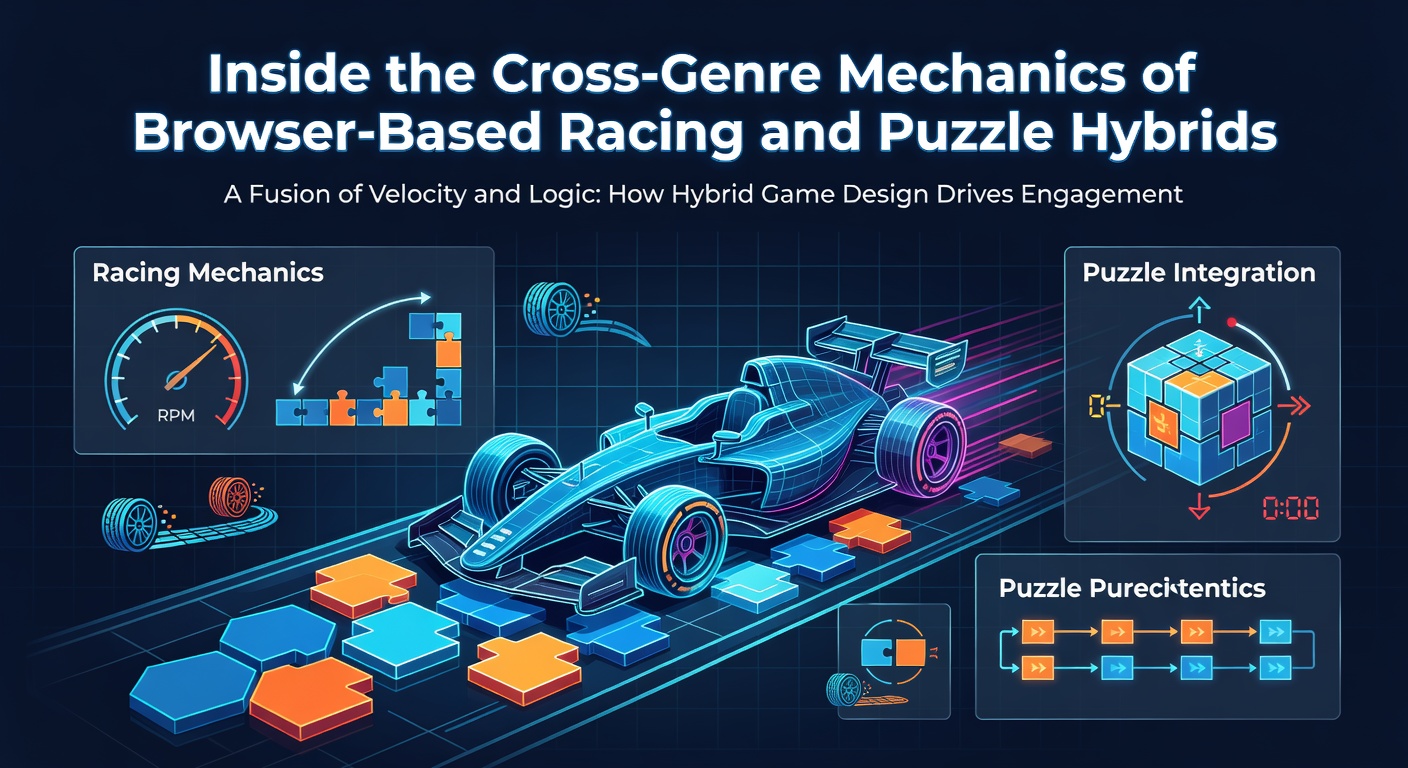
Browser-based racing and puzzle hybrids combine high-speed navigation mechanics with logic-driven challenges, allowing players to solve environmental puzzles while maintaining velocity on procedurally influenced tracks. These games operate entirely within web browsers through HTML5 and WebGL frameworks, eliminating installation barriers and enabling instant access across devices. Research from the Entertainment Software Association indicates steady growth in such cross-genre titles, with participation metrics showing increased engagement in sessions that interleave acceleration sequences with cognitive tasks.
Core racing components feature vehicle physics that respond to real-time inputs like steering curves and boost triggers, yet these elements integrate directly with puzzle layers where players must decode patterns to unlock shortcuts or deactivate obstacles. One mechanic involves color-matching sequences that open route barriers mid-race, forcing split-second decisions that blend spatial awareness with deductive reasoning. Data from industry reports reveal that successful navigation often requires players to memorize track layouts while calculating optimal puzzle solutions under time constraints, creating layered difficulty that scales with progression.
Integration of Racing Velocity and Puzzle Logic
Mechanics in these hybrids typically embed puzzle elements into the racing environment rather than separating them into distinct phases, so a player might steer through a winding course while simultaneously aligning floating objects to form pathways or deactivate traps. This seamless layering means velocity becomes a variable that affects puzzle complexity, since faster speeds reduce reaction windows for solving riddles or sequencing switches. Observers note that browser constraints encourage lightweight implementations where puzzle states persist across laps without heavy server calls, relying instead on client-side scripting for responsive feedback.
Multiplayer variants extend these systems by introducing shared puzzle elements, such as collaborative code-breaking that affects all participants' tracks simultaneously, or competitive sabotage where one racer's solved puzzle alters another's route. Figures from the European Games Developer Federation highlight how these modes leverage WebSocket connections for synchronized updates, maintaining low latency even when multiple users manipulate the same environmental variables during a single session.
Technical Frameworks and Accessibility Features
Development relies on canvas rendering for fluid animations alongside modular JavaScript libraries that handle both physics simulations and puzzle state machines. In May 2026, updates to browser APIs have further streamlined particle effects for speed trails and dynamic lighting on puzzle interfaces, according to technical documentation from major engine providers. Accessibility options include adjustable puzzle timers and color-blind modes that remap sequence indicators, ensuring broader participation without altering core challenge structures.

Progression systems track combined metrics, such as lap times adjusted by puzzle completion efficiency, which feed into global leaderboards refreshed through cloud-synced databases. Players often encounter randomized puzzle variants per session to prevent rote memorization, generated via algorithms that balance difficulty against average completion rates collected anonymously across user bases. Those who study engagement patterns find that hybrid designs encourage repeated attempts because failed puzzles deduct time rather than ending runs outright, sustaining momentum through the racing segments.
Emerging Patterns in Hybrid Design
Designers frequently draw from established racing templates while grafting on adaptive puzzle difficulty that responds to player speed choices, creating branching outcomes where aggressive driving unlocks harder logic gates and cautious pacing permits simpler sequences. This approach appears in titles that use environmental storytelling through track architecture, where puzzle clues are hidden in scenery details visible only during specific velocity ranges. Academic studies from institutions such as the University of Alberta's gaming research lab document how these integrations influence cognitive load, with eye-tracking data showing alternating focus between navigation and problem-solving zones.
Community-driven updates continue to expand these frameworks through mod support that lets users contribute custom puzzle modules compatible with existing physics engines. Metrics collected in 2026 demonstrate sustained daily active users in regions with high mobile browser adoption, where touch-optimized controls map swipe gestures to both steering and puzzle interactions simultaneously.
Conclusion
Browser-based racing and puzzle hybrids demonstrate how velocity-based progression and logical deduction can coexist within lightweight web environments, supported by evolving browser technologies and data-backed design choices. These systems deliver structured challenges that scale across skill levels while maintaining accessibility through no-download formats. Continued refinement in synchronization tools and adaptive algorithms points toward expanded implementations that preserve the balance between speed and strategy in future iterations.