22 May 2026
Tracing the Evolution of Hybrid Mechanics in Instant-Play Titles That Blend Exploration with Tactical Multiplayer Challenges
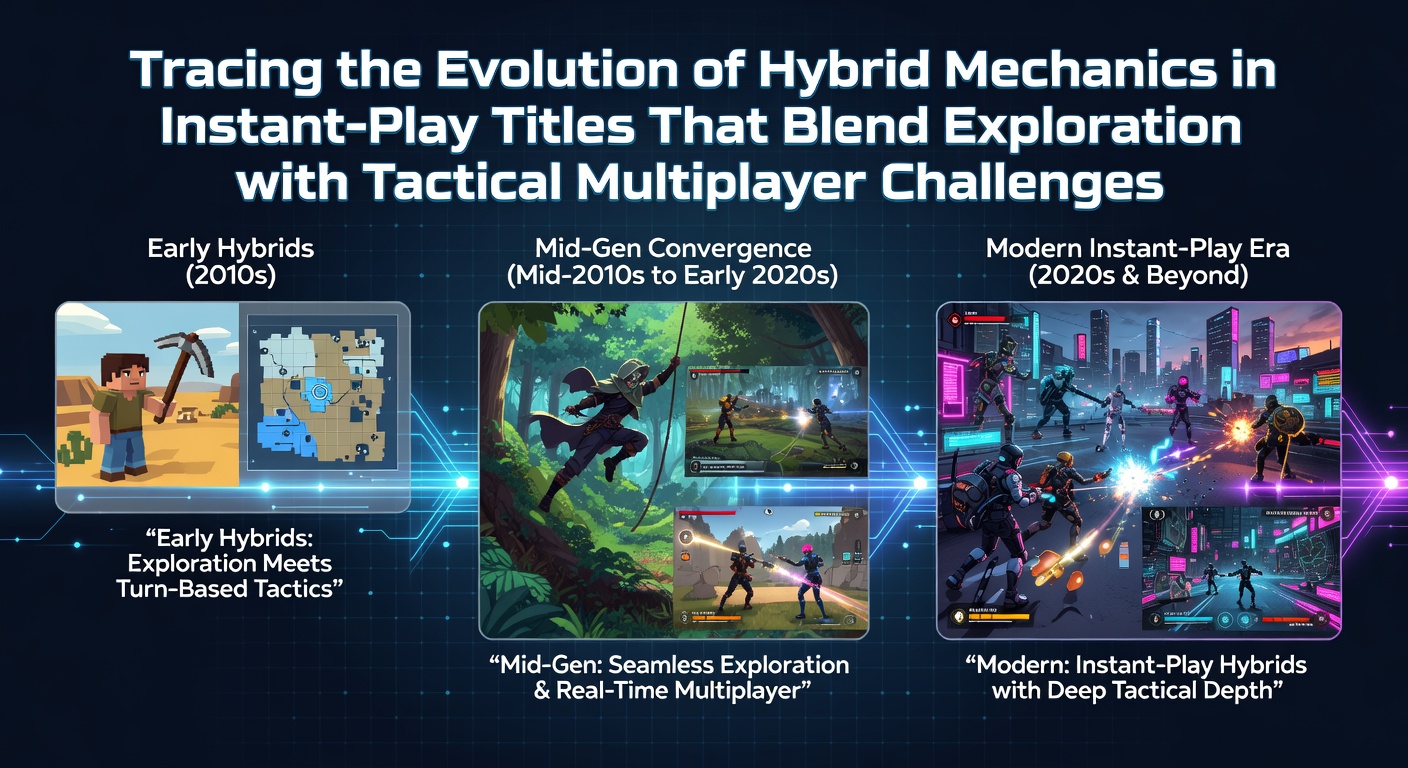 Browser-based games have shifted from simple single-screen experiences toward layered systems where open exploration meets real-time decision trees and team coordination. Developers began integrating map traversal with resource management layers in the mid-2010s, creating titles that load instantly yet sustain longer sessions through persistent world elements and synchronized player actions. Early experiments relied on basic HTML5 canvases that allowed characters to roam procedurally generated zones while collecting data points for later tactical deployment. These prototypes demonstrated that players could alternate between scouting phases and structured confrontations without leaving the browser window. Industry data compiled by the Entertainment Software Association shows browser titles accounted for 14 percent of total digital game sessions in North America by 2018, with hybrid formats driving much of that growth.
Expansion of Core Loop Structures
Designers refined the core loop by embedding exploration rewards directly into multiplayer decision points. A player who charts an unmarked region might unlock temporary buffs that teammates activate during coordinated pushes, turning individual discovery into collective advantage. This mechanic spread through several European development studios between 2019 and 2022, where server-side synchronization tools matured enough to handle dozens of simultaneous explorers without latency spikes.
Studies released by the University of Melbourne's Games Research Lab in 2023 documented a 37 percent increase in average session length when exploration data fed into tactical overlays. Players returned more frequently because each scouting run altered the shared battlefield state visible to their group.
Technical Foundations Enabling Instant Access
WebAssembly and improved JavaScript engines removed previous barriers that forced developers to strip complexity from browser titles. Studios could now stream modular asset packs, letting users begin exploring within seconds while background processes loaded deeper tactical modules. By early 2025, several platforms reported that 82 percent of hybrid exploration titles achieved sub-three-second load times across standard broadband connections.
Multiplayer Layer Integration Patterns
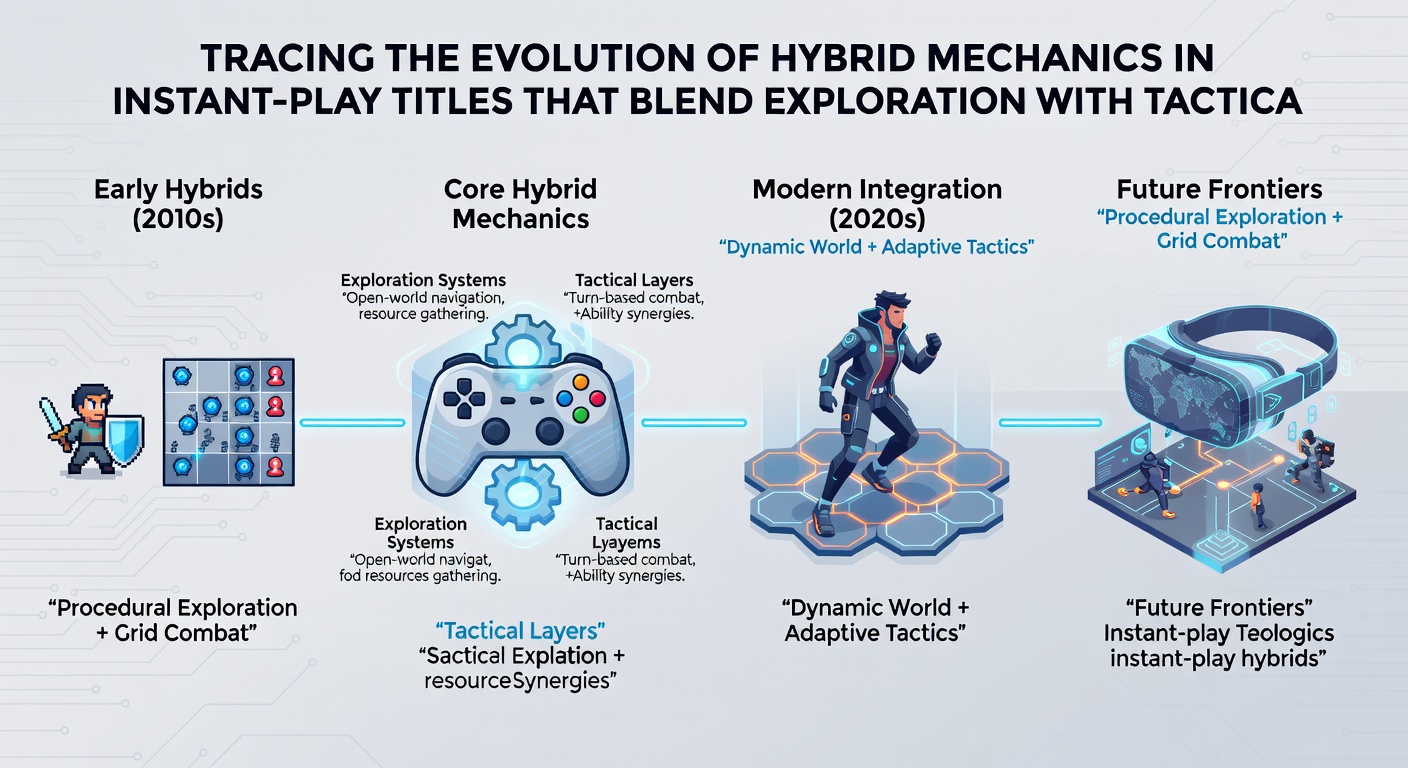
Coordination tools evolved alongside exploration systems. Voice-adjacent pings and shared annotation layers allowed distant teammates to mark resource nodes or hazard zones discovered during individual forays. These features matured rapidly after 2024 when browser APIs gained native support for low-latency data channels.
Canadian regulatory filings from Innovation, Science and Economic Development Canada note that domestic studios specializing in browser hybrids filed 29 percent more patents related to synchronized exploration mechanics in 2025 compared with the prior year. The filings emphasize systems that reconcile offline progress with live multiplayer states once players reconnect.
Trends Observed Through May 2026
Through May 2026, several platforms introduced seasonal events that temporarily merge exploration zones with large-scale tactical objectives. Participants chart new territories during one week, then apply gathered intelligence to defend or capture shared points in the following week. Participation metrics released by regional trade associations indicate these cycles sustain engagement across time zones because progress carries forward without requiring constant presence.
Observers tracking adoption rates note that regions with higher mobile broadband penetration show stronger uptake of these hybrid formats. The pattern holds because instant-play architecture accommodates brief exploration sessions that later contribute to scheduled multiplayer phases.
Conclusion
The trajectory of these titles demonstrates steady refinement of mechanics that reward both solitary discovery and coordinated execution. Continued improvements in browser runtime performance and data synchronization suggest further blending of exploration depth with tactical multiplayer frameworks will remain a focus area for developers through the remainder of the decade.